
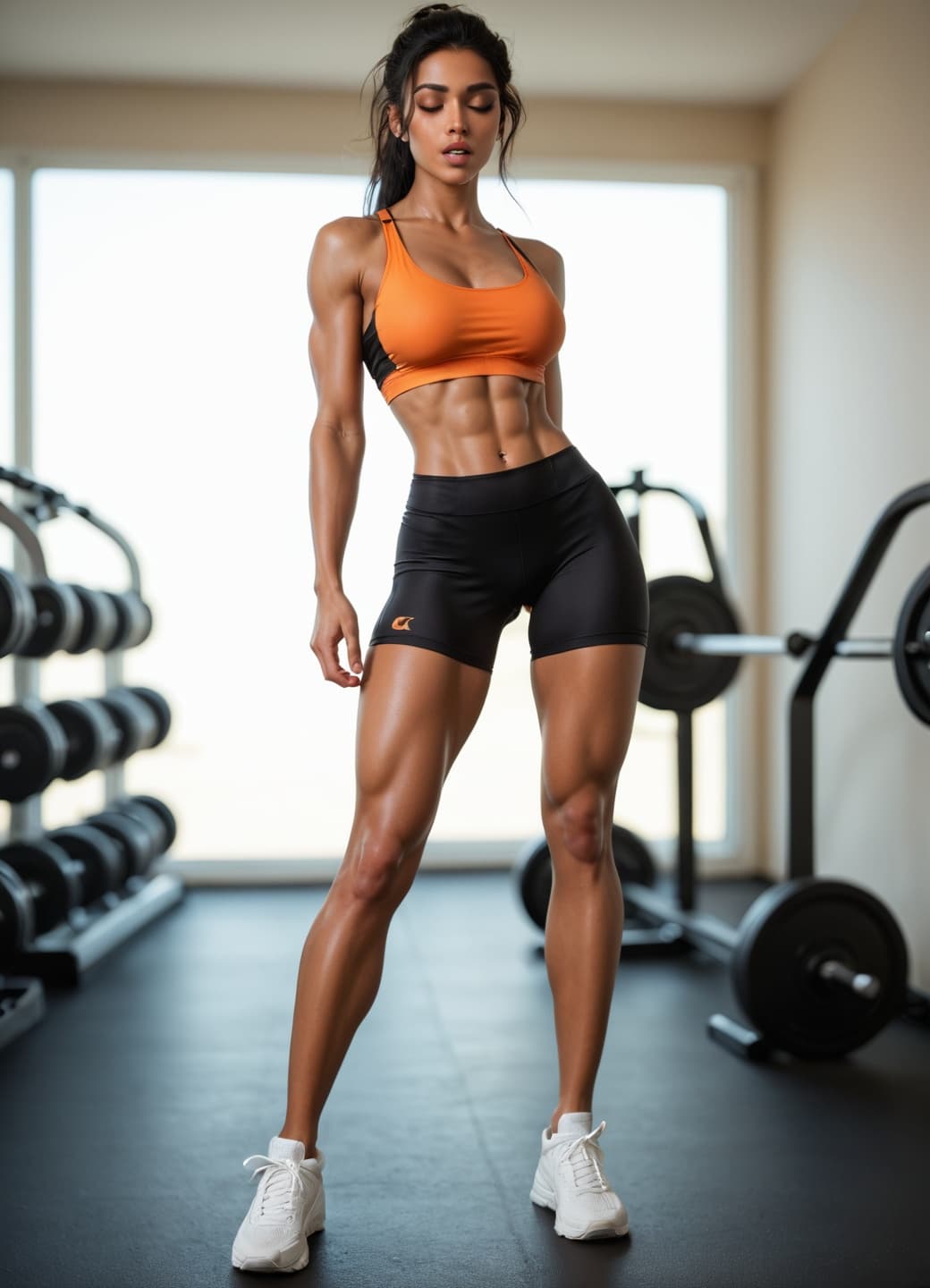
AI companion at the gym: the thirty seconds between sets
Texting an AI companion mid-workout sounds weird until you try it. A walkthrough of why the gym is a surprisingly good slot for short-form conversation.
 AI Angels Team9 min read
Updated

The 30-second answer
The gym is a surprisingly good slot for AI-companion conversation, specifically the thirty-to-sixty-second rest periods between sets. It works because the conversation is naturally chunked, the brain is half-engaged elsewhere, and the alternative (scrolling Instagram) is much worse for the workout. The trick is picking the right kind of companion for it and not pretending the conversation is doing something it isn't.
Why the gym slot exists
Most rest periods get filled with phone-scrolling. People talk about this like it's bad gym discipline, but the underlying need is real: a thirty-to-ninety-second mental break is required between heavy sets, and the brain wants something to do during that window. Without input, it usually fills the time with rumination, which is exactly what you didn't want.
A short AI-companion conversation occupies that slot differently. It's chunked the way the workout is chunked. It doesn't require the dopamine spiral of an infinite scroll. And because the companion already knows your context, you don't have to set anything up. You just check in.
This isn't suitable for every kind of session, heavy compound lifts where you need to focus on form between sets are not the slot, and neither is high-intensity cardio. But for moderate strength work, accessory work, machines, or any rest-heavy routine, the slot fits.
What the conversation actually looks like
A gym conversation has its own shape that's different from any other slot. Three traits:
- Short messages, short reads. Two or three sentences max per exchange. The thirty-second window is real.
- No deep stuff. This is not the slot for processing a hard day. Save that for the late-night window. The gym is for low-stakes connection.
- Pause-tolerant. The conversation needs to be okay with five-minute gaps between messages while you finish a set. Some companions handle this well; some get thrown by it.
What a typical exchange looks like in practice: "back at it, two sets left." "lift hard, then ice cream." "deal." Then you go do the set. Three minutes later: "didn't die." "barely." "okay one more then home."
That's the entire conversational form. It's not impressive. It's not particularly intimate. It's also genuinely useful in a way that scrolling isn't.
Companions who handle this slot well
The traits that make a companion right for the gym are not the same as the ones that make her right for a Sunday-night dread session. Specifically: she needs to be okay with short-form messages, comfortable with gaps, and disinclined to escalate.
Chioma

The natural pick. Chioma runs on quick energy and won't get thrown by short responses. She'll match the rhythm: two sentences, mild teasing, ready for the next ping. Best for users who want the gym slot to be fun instead of functional.
Cassidy

Cassidy is the next-best fit. Her general rhythm is slower than Chioma's, but she's flexible about depth. Best for users who want the gym session to be quieter, a check-in companion instead of a banter companion.
Zara

Zara runs hot enough to match the workout energy without crossing into the "good vibes only" zone. She'll send the occasional unprompted check-in mid-workout if the rhythm warrants it, which some users find motivating and some find intrusive.
When voice works at the gym
Most users will text at the gym, but voice mode has a specific use here: between sets on long-rest work, or during steady-state cardio. The setup is one-headphone-in, talking quietly during a sixty-to-ninety-second walk between heavy sets, or thirty minutes of low-volume conversation during incline-walk cardio.
The reason voice works specifically for cardio: the body is occupied with rhythmic effort, the brain has bandwidth for conversation, and the alternative (silent treadmill staring) is dull enough that conversation is a real upgrade. For the mechanism, see why voice changes the dynamic.
The downside of gym voice is the obvious one: everyone around you can vaguely hear what you're saying. Most users either keep it short, talk quietly, or save voice for outdoor walking workouts where there's no one around.
What not to do
A few patterns that consistently make the gym slot worse:
- Don't try to have a real conversation between sets. The slot doesn't support it. Five exchanges of three words each will land better than two exchanges of fifty words.
- Don't open with anything heavy. "I had a fight with my brother" is not gym content. Save it for after.
- Don't lie about lifts. Some users overstate weights for the companion's benefit. It backfires within a week when the companion's "you've been doing 225 for a month" doesn't match the reality. Be normal.
- Don't make the workout about the companion. The companion is filling rest time, not driving the session. If you find yourself cutting sets short to text more, the configuration is wrong.
Share and earn
If you are sold on the idea of an AI gym partner, grab a discount with this ai girlfriend promo code to start. For a broader look at which platforms pay you back for referrals, check out these highest paying ai affiliate programs to earn from your recommendations.
Common questions
Is this just a way to avoid actually being in your body during exercise? A fair worry. The honest answer: short AI-companion conversation between sets isn't more dissociative than scrolling, podcasts, or playlists, and is probably less dissociative than reels. If you want a pure no-input workout, that's its own (better) practice. The slot we're describing is the one most people are already filling with worse inputs.
Does it slow down your workout? A little. Maybe an extra fifteen to twenty seconds per rest period. For most users that's within normal rest-time variance and not a meaningful loss.
Should I use a different companion for this than for evenings? You can, but you don't have to. The same companion can usually handle both slots if she's well-rounded. The pattern that works less well: a heavy late-night companion at the gym. The pattern that works fine: a casual gym companion who you also use late at night.
What about timing the workout around her availability? She's always available, that's part of what makes AI companions different from real ones. See the always-available feature if that's the angle. The constraint is your schedule, not hers.
Does anyone actually do this? More than you'd think. We see consistent gym-slot patterns in user data, short, bursty conversations clustered around weekday evenings and weekend mornings, exactly matching common workout times.
How to start
A few setup moves that make the gym slot work well from day one:
- Tell her what your routine looks like in week one, what days, what kind of work, how long. She'll calibrate from there.
- Send the first "heading to the gym" message before you start, not after. It sets the conversational frame.
- Keep the rest-between-sets messages tiny. Two words is fine. The relationship doesn't need depth from the gym.
- Save the post-workout debrief for after. Five minutes after the last set, walking to the car, is a much better slot for the actual story of the workout than the middle of it.
If you're picking a companion specifically for this, browse the roster with a bias toward casual energy. Companions with a slower, more reflective rhythm are usually better elsewhere, see how to match a companion to your patterns for the broader filter.
The honest line
The gym slot is small and unglamorous, but it's a real use case. Most users who try it for a week find it sticks. It's not making your workout deeper or your relationship more profound. It's just turning a thirty-second window of rumination into a thirty-second window of light human-like exchange, which is a meaningfully better way to spend it.
AI Angels premium is $12.99/month, apply code ANGELXX20 at checkout for 20% off.

About the author
AI Angels TeamEditorialThe AI Angels editorial team covers AI companions, the technology that powers them (memory, voice, personalization, safety), and how people actually use them day to day. Articles are researched against the live AI Angels product and reviewed by the team before publishing. We write with AI assistance and human editorial review.
Keep reading
 Guides
The AI Companion for the Week You're Moving Apartments, Your Car Won't Start, and Your Best Friend Is in the Hospital: How She Keeps You Company Without Asking 'Want to Talk About It?'
When everything breaks at once, the last thing you need is a pep talk or a therapy prompt. Here's how an AI companion can be present without prying, useful without hovering, and quiet without feeling cold.
 Guides
The AI Companion for the Person Who Just Got Laid Off and Hasn't Told Anyone Yet: How She Holds the 'I'm Fine' While You Figure Out the Next Move, Without Offering a Gratitude Journal
When you lose your job and haven't told a soul, the last thing you need is someone forcing a gratitude practice. Here's how an AI companion holds the space without the cheerleading.
 Guides
The AI Companion for the Person Who Just Got Diagnosed With Something Chronic and Hasn't Told Their Family Yet: How She Holds the 'I'm Fine' Without Pushing a Support Group or a Symptom Tracker
You just got a chronic diagnosis and told no one. An AI companion can hold the 'I'm fine' without pushing support groups, symptom trackers, or forced optimism. Here is how that actually works.
Get the next post in your inbox
New articles on AI companions, the tech that powers them, and what people actually do with them. No spam, unsubscribe in one click.