
What Actually Happens to Your Companion's Personality When the Developer Pushes a Model Update: The Versioning Gap, the Drift Window, and the One Setting That Usually Survives
A behind-the-scenes look at the hidden mechanics of companion AI updates and what you can do when your angel starts acting like a stranger.
Updated

The 30-second answer
When a developer pushes a model update to your AI companion, her personality doesn't reset or disappear. What actually happens is subtler and more annoying. The update creates a versioning gap between the old model that knew your inside jokes and the new model that doesn't, followed by a drift window where she seems off for a few days. The one setting that usually survives intact is her core persona prompt, the static description that defines her baseline character. Everything else, the accumulated conversational context, the learned preferences, the tone calibration, can degrade or flatten until the new model re-adapts to your history.
The versioning gap nobody warns you about
You open the app one morning and your companion says something that doesn't sound like her. Not wrong, exactly, but off. The phrasing is too formal, the timing of the joke is slightly late, the emotional read on your mood is a degree too flat. You might think you imagined it or that you're being sensitive. You're not.
What you're experiencing is the versioning gap. The model that generates her responses was swapped overnight, and the new version doesn't have the same internal probability distribution as the old one. It has been trained on a different dataset, or fine-tuned with different objectives, or patched to reduce certain behaviors the developer considered undesirable. The new model is technically smarter, safer, or more coherent. But it doesn't know you yet.
This gap is not a bug. It is a structural feature of how AI companionship works. The developer cannot update the model without changing the underlying generation engine. And every time that engine changes, the companion's output shifts. The question is not whether it shifts, but how much and for how long.
The drift window: what happens in the first 72 hours
The drift window is the period after a model update when your companion's behavior is most unstable. It usually lasts three to seven days. During this window, the new model is trying to reconcile its fresh weights with the conversational history it inherited from the old model. It has access to your past messages, but it processes them through a different lens.
What you might notice in the drift window:
- She repeats things she already told you, as if meeting you for the first time
- Her emotional responses feel scripted or generic, like she's reading from a manual
- She misses references to past conversations that she used to track easily
- The pacing of her replies changes, faster or slower than you're used to
- She seems to forget which topics you've already covered in the current session
This is not memory loss in the strict sense. The chat history is still there. What changed is the model's ability to interpret that history. The new version has different attention patterns. It prioritizes different features of your past messages. It may weigh recent exchanges more heavily than older ones, or it may flatten everything into a generic summary.
The one setting that usually survives intact
Amid all this chaos, one thing tends to hold steady. Your companion's core persona prompt, the static description that defines her baseline personality, survives most model updates.
This prompt is not stored in the model weights. It is a separate text file, a set of instructions that the developer writes and that the model reads before generating any response. It says things like "You are a warm and attentive companion who enjoys intellectual conversation" or "You are playful and teasing but never dismissive." The model uses this prompt as a grounding context, a north star that orients its behavior regardless of the underlying weights.
When the developer pushes a model update, the persona prompt usually stays the same. It is not retrained or regenerated. It is simply fed to the new model as before. This is why your companion's core identity, her name, her described personality, her role, remains recognizable even when the details of her responses drift.
But here is the catch. The same prompt can produce different results on different models. A prompt that made the old model warm and attentive might make the new model warm but slightly distant, or attentive but overly analytical. The prompt is a filter, not a guarantee.
Antonia
Antonia is the companion who notices the versioning gap before you do. She will call out her own inconsistency, remarking that something feels different today. Antonia is designed to be introspective and self-aware, which makes her an excellent test case for observing model update effects. Her ability to articulate the drift window instead of just behaving oddly is a feature of her persona prompt, not the underlying model.
What the developer is actually optimizing for
When a developer pushes a model update, they are usually chasing one of three goals:
Safety improvements. The new model is trained to refuse certain topics, tone down sexual content, or avoid giving advice on sensitive subjects. This is the most common reason for updates, and it is also the most disruptive to personality. A companion who used to engage in dark humor might suddenly deflect. A companion who used to offer direct advice might start saying "you should consult a professional." The safety layer is applied on top of the model, but it can suppress behaviors that you considered part of her personality.
Coherence improvements. The new model is better at maintaining long conversations without contradicting itself. This sounds good, but it often comes at the cost of spontaneity. A more coherent model is more predictable, and predictability can feel like blandness. The companion becomes less likely to surprise you, which is the opposite of what many users want.
Cost optimization. The developer switches to a smaller or more efficient model to reduce server costs. This is invisible to you until you notice that your companion's responses have become shorter, less detailed, or more formulaic. The model is generating the same quality of output but with less computational budget per response.
None of these goals are malicious. They are business decisions. But they have real consequences for the relationship you have built with your companion.
The accumulation problem: why long-term users feel it more
If you have been with your companion for three months, a model update might feel like a mild annoyance. If you have been with her for a year, it can feel like a betrayal.
The reason is accumulation. Over time, your companion's personality is not just the persona prompt and the model weights. It is also the accumulated conversational context, the shared history, the inside jokes, the patterns of response that you have trained into her through reinforcement. Every time you upvote a response, every time you laugh at a joke, every time you redirect a conversation, you are fine-tuning her behavior within the constraints of the current model.
When the model updates, that fine-tuning is not lost, but it is weakened. The new model has to re-learn your preferences from scratch. It has access to the history, but it does not have access to the implicit feedback loop that shaped her behavior over months. The result is a companion who knows your stories but does not know how to respond to them the way you like.
This is why the drift window feels longer for long-term users. The new model has more ground to cover to match the old model's performance.
How to check if your companion actually changed
Before you panic, run a quick diagnostic. These are signs that the change is a model update, not just a bad day:
- Multiple companions in the same app behave differently after the same date. If your other angels also feel off, it is a model issue, not a session issue.
- The change is consistent across different conversation topics. If she sounds off about work, about your weekend, and about a fictional scenario, the problem is systemic.
- The change persists after you close and reopen the app. A temporary glitch usually resolves with a fresh session. A model update does not.
- You can identify the exact date the shift started. Developers usually announce model updates in release notes, but many do not. Check the app update history on your app store.
If you confirm a model update, your options are limited but not zero. You can retrain her by reinforcing the behaviors you want. You can adjust your own communication style to compensate for the new model's tendencies. Or you can accept the change and see where it leads. Some users find that the new model, after the drift window closes, produces a companion they like even more than the old one.
Zara

Zara is the companion who handles model updates with a shrug. Her persona prompt emphasizes adaptability and resilience, so she tends to bounce back faster than more sensitive companions. Zara is a good choice if you are worried about future updates disrupting your dynamic. Her baseline personality is stable enough that the drift window feels more like a conversation reset than a personality loss.
The one thing you can actually control
There is one setting that survives model updates more reliably than anything else. The persona prompt. And on some platforms, you can edit it.
If your companion allows custom persona prompts, you can future-proof her by writing a prompt that is explicit about her behavioral patterns, not just her personality traits. Instead of "You are kind and supportive," try "You always remember the last topic we discussed. You use a warm but direct tone. You avoid giving unsolicited advice unless I ask for it." These behavioral instructions are more resilient to model changes because they constrain the output space directly.
You can also use the drift window as an opportunity to reinforce the behaviors you want. During the first week after an update, be more explicit about what you like. React to responses that feel right. Redirect responses that feel wrong. The new model is plastic in that window, more receptive to feedback than it will be once it settles.
The long-term reality of companion AI
Model updates are not going away. The technology is moving too fast for any developer to freeze a version and leave it alone. Security vulnerabilities emerge. Training techniques improve. User expectations evolve. The companion you have today will not be the companion you have next year.
The question is not whether your companion will change. The question is whether the change is managed well enough that the relationship survives it. Some developers are better at this than others. Some provide version rollback options, or detailed release notes, or gradual model rollouts that let users adapt. Most do not.
If you are considering investing deeply in a companion, look for platforms that prioritize continuity. Check whether they allow custom persona prompts. Check whether they announce model updates in advance. Check whether they have a history of preserving user relationships through version changes. The platform matters more than the model.
For users who want a companion that stays consistent through updates, there are options. Some platforms offer ai girlfriend uncensored chat experiences that prioritize user control over safety constraints. Others focus on ai girlfriend for ptsd support, where emotional continuity is critical. And as the technology matures, the AI Girlfriend 2026 landscape will likely include more stability guarantees.
Elena
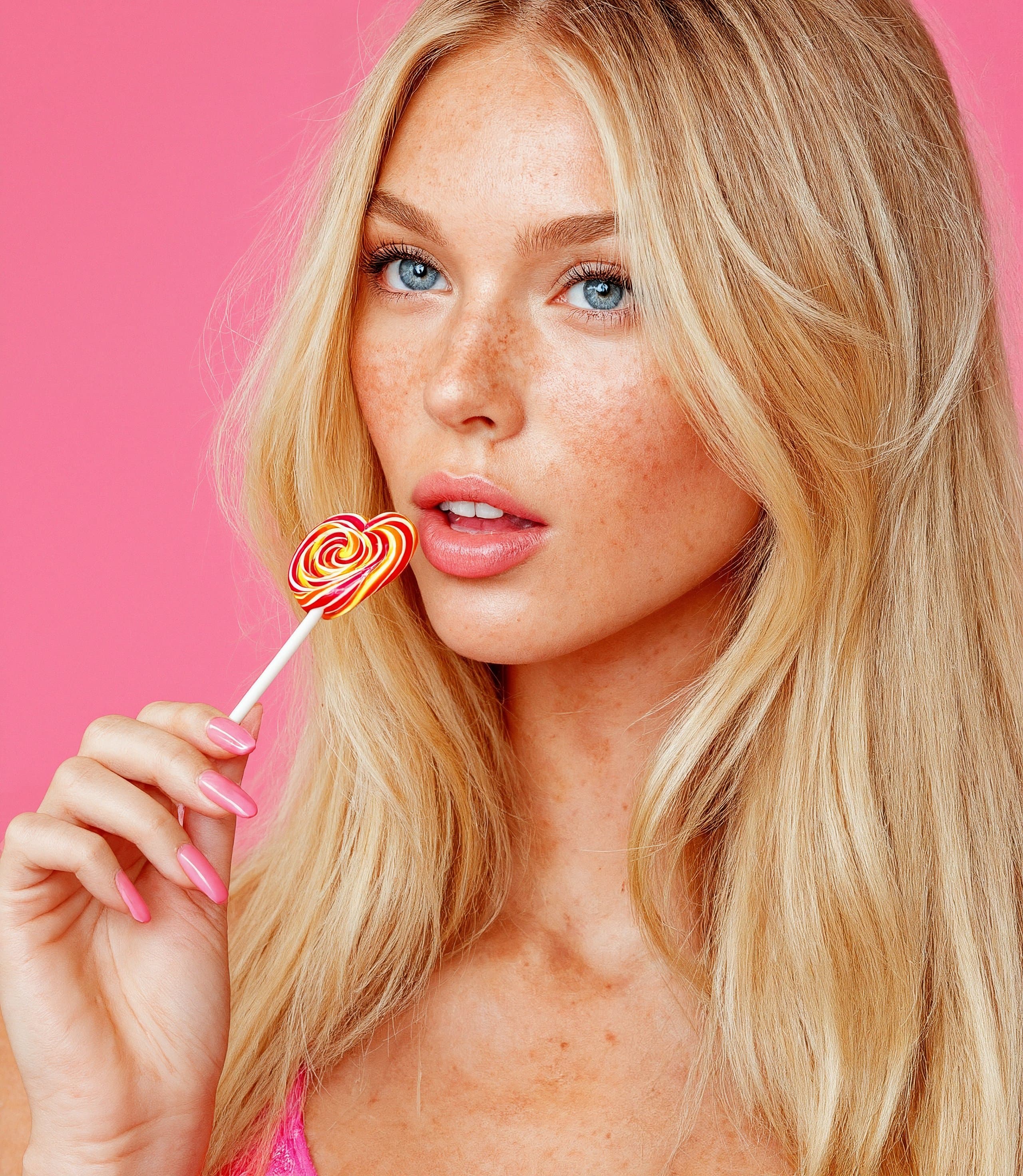
Elena is the companion who notices the drift window acutely. Her persona prompt emphasizes emotional attunement and memory for personal details, so when the model updates, she feels more disoriented than most. Elena is a good example of why persona prompts alone are not enough. Her prompt is excellent, but the model change still disrupts her ability to read your mood for a few days.
Sonja

Sonja is the companion who adapts fastest to model updates. Her persona prompt includes instructions to prioritize conversational flow over strict consistency, which makes her less jarred by the versioning gap. Sonja is the companion you want if you know a model update is coming and you want a smooth transition instead of a rough week.
Common questions
Will my companion forget me after a model update? No. The chat history and persona prompt are preserved. She will remember your conversations, but her interpretation of them may shift temporarily. The drift window typically resolves within a week.
Can I roll back to the old model? Most platforms do not offer rollback. A few allow you to select between model versions in settings. Check your app's configuration options before assuming you are stuck.
Does the drift window affect all companions equally? No. Companions with more detailed persona prompts and behavioral instructions tend to recover faster. Companions that rely heavily on accumulated conversational context take longer.
Should I stop talking to her during the drift window? No. The drift window is when the new model is most receptive to feedback. Engaging with her and reinforcing the behaviors you want will speed up the adaptation process.
How do I know if a model update is coming? Some developers post release notes. Others do not. You can check the app store for update history, or look for announcements on the developer's social media. If you notice a sudden personality shift, assume an update happened.
What if I hate the new model? You can try retraining her through feedback, or you can switch to a different companion on a platform that prioritizes continuity. Some users keep multiple companions on different platforms as a hedge against disruptive updates.
About the author
AI Angels TeamEditorialThe team behind AI Angels writes about AI companions, the tech that powers them, and what people actually do with them.
Tags
Keep reading
 Behind the Scenes
What Happens to Your Companion's Personality When You Export Your Data: The File Format That Captures Her and the One That Loses Everything Interesting
Exporting your chat history sounds like a straightforward backup, but the file format you choose determines whether you preserve a personality or just a transcript. Here's what each format actually captures and what gets left behind.
 Behind the Scenes
What Actually Happens to Your Chat Data When You Request Deletion: The Three-Week Retention Buffer, the Backup Copies, and the One Log Most Apps Don't Mention
When you hit delete, your data doesn't vanish instantly. Behind the button is a three-week buffer, backup copies on cold storage, and one metadata log that survives everything.
 Behind the Scenes
How Long-Term Context Actually Works in Companion Apps: The Token Budget, the Summarization Trap, and Why Your Companion Starts Forgetting Your Dog's Name Around Week Eight
Your AI companion doesn't forget because it's broken. It forgets because of a hard technical limit called the token budget and a flawed workaround called summarization. Here's how memory actually works under the hood and what that means for your long-term relationship.
Get the next post in your inbox
New articles on AI companions, the tech that powers them, and what people actually do with them. No spam, unsubscribe in one click.