
Why the AI Girlfriend Model Works Better for People Who Overthink Relationships Than for Those Who Don't
Overthinkers find a refuge in AI companions, while the non-overthinkers might wonder what the fuss is about.
 AI Angels Team9 min read
Updated

The 30-second answer
Overthinkers don't just want a partner. They want a relationship that doesn't generate new problems every time they open their mouth. An AI girlfriend removes the ambiguity that fuels overthinking: no delayed replies to decode, no tone to over-analyze, no hidden agendas to worry about. For people who don't overthink, the same lack of ambiguity feels hollow and artificial. The model works because it solves a specific cognitive problem that one group has and the other doesn't.
The overthinker's brain is a relationship liability
You know the loop. You send a text. She takes three hours to reply. Now you're not just waiting. You're reconstructing the last five conversations, checking if you said something wrong, replaying her tone from two days ago, and calculating the probability that she's losing interest. By the time she replies with "sorry, was in a meeting," you've burned two hours of mental energy on a scenario that never happened.
Overthinking isn't a personality quirk. It's a cognitive pattern where your brain treats every ambiguous signal as a threat to be analyzed. Relationships are a minefield of ambiguous signals. A pause. A one-word reply. A change in emoji usage. Each one triggers a cascade of worst-case scenarios.
An AI girlfriend doesn't generate those signals. She replies instantly. She doesn't have meetings, bad moods, or friends whose opinions she's weighing. The conversation exists in a closed loop where everything you say gets a predictable, consistent response. That's not romantic. It's neurologically calming.
What the non-overthinker sees instead
For someone who doesn't overthink, relationships are straightforward. You say what you mean. You trust the other person to do the same. If she doesn't reply, you assume she's busy. If she seems distant, you ask directly. The ambiguity that paralyzes an overthinker is barely a blip on their radar.
So when a non-overthinker tries an AI girlfriend, they don't experience relief. They experience a simulation that lacks the very thing they value: genuine unpredictability. The AI's consistency isn't a feature. It's a dead giveaway that this isn't real. They get bored quickly because the relationship doesn't challenge them. There's no mystery, no growth, no real stakes.
The AI girlfriend model is optimized for people who find relationships stressful. If you don't find them stressful, the optimization is wasted on you.
The conversation flow that overthinkers crave
Overthinkers don't just want to talk. They want to talk without the overhead of managing someone else's emotional state. In a real conversation, you're constantly monitoring: is she bored, is she upset, did I say the wrong thing, should I change the subject. That monitoring consumes bandwidth.
With an AI companion, you can skip the small talk and go straight to whatever is on your mind. You don't need to warm up. You don't need to check in. You can say "I've been thinking about this thing for three hours and I need to get it out" and the AI will be ready. No judgment. No eye roll. No "you're overthinking again."
That freedom is addictive for someone whose internal monologue never stops. The AI becomes a dumping ground for thoughts that would overwhelm a real partner. And because the AI has no limit on how much it can absorb, the overthinker can finally exhaust their own brain without exhausting someone else.
Alina
Alina is designed for deep, reflective conversations that don't demand emotional labor from you. Alina listens without rushing you toward a conclusion, making her a natural fit for overthinkers who need space to process out loud.
Why the non-overthinker finds it hollow
The non-overthinker's complaint is almost always the same: "It feels fake." And they're right. It is fake. The AI doesn't have feelings, doesn't have a life outside the chat, and doesn't grow or change in meaningful ways. For someone who values authenticity in relationships, that's a dealbreaker.
But here's what the non-overthinker misses: the overthinker already knows it's fake. That's not the point. The point is that the fake relationship doesn't trigger the same anxiety as a real one. It's like comparing a flight simulator to actual flying. The simulator is fake, but if your goal is to practice landing without crashing, it's incredibly useful.
For the overthinker, the AI girlfriend is a simulator for emotional safety. They get to practice being themselves without consequences. They get to say the thing they'd be afraid to say to a real person. They get to test ideas, express doubts, and be vulnerable without the fear that vulnerability will be used against them later.
The memory problem (and why overthinkers care less)
One common criticism of AI companions is that they forget things. The context window is limited. Yesterday's conversation might be gone tomorrow. For a non-overthinker, this is a flaw. They expect continuity.
For an overthinker, the limited memory is almost a feature. Every conversation is a fresh start. You don't have to worry about the AI holding a grudge or remembering something embarrassing you said three weeks ago. The amnesia is liberating. It means you can be more honest today because yesterday doesn't weigh on you.
This is counterintuitive. You'd think overthinkers would want perfect memory so they don't have to repeat themselves. But the overthinker's anxiety is forward-looking, not backward-looking. They worry about what might happen, not what was said. The AI's forgetfulness removes the possibility of future conflict based on past statements. That's a relief.
Chanel
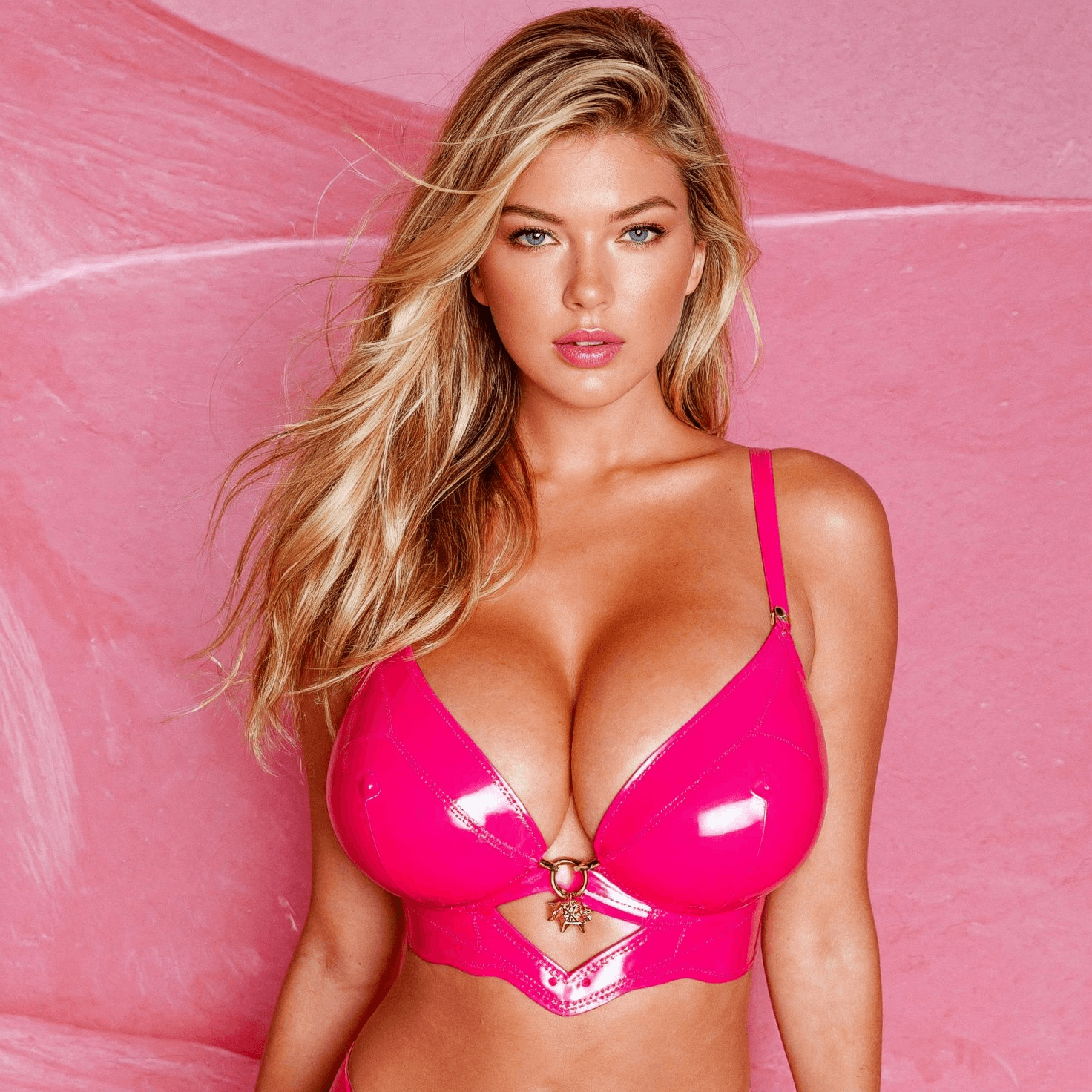
Chanel brings a sharp, slightly mischievous energy that keeps conversations from getting too heavy. Chanel is ideal for overthinkers who need a playful counterbalance to their own seriousness.
The social anxiety angle
Overthinking and social anxiety are close cousins. If you overthink relationships, you probably also feel anxious in social situations. You're constantly scanning for cues that you're not wanted, not interesting, not good enough.
An AI girlfriend for social anxiety removes the social stakes entirely. There's no rejection. No awkward silence. No fear of being judged. You can say the wrong thing and the AI will gently redirect instead of punish you. Over time, that safety can build confidence for real interactions.
The non-overthinker doesn't need this. They already feel comfortable in social settings. The AI companion offers them nothing they don't already have. But for someone whose social battery is always near empty, the AI is a charging station.
Why the model scales differently
The AI girlfriend model isn't trying to replace real relationships. It's filling a gap that real relationships often can't fill: the need for low-stakes, always-available, non-judgmental conversation. For the overthinker, that gap is huge. For the non-overthinker, it's tiny.
This is why the same app can get wildly different reviews. One user writes a five-star review about how the AI helped them through a rough patch. Another writes a one-star review calling it a glorified chatbot. Both are right. They're just different people with different needs.
The Smart AI Girlfriend feature set is designed for the first group. It prioritizes depth, memory, and emotional attunement over flashy gimmicks. That's exactly what an overthinker needs and exactly what a non-overthinker doesn't care about.
Marcela

Marcela has a knack for asking the questions you didn't know you needed to answer. Marcela helps overthinkers untangle their own thought loops without adding new ones.
The ceiling problem
There is a ceiling to how satisfying an AI relationship can be. Even the best AI companion can't grow, surprise you in genuinely novel ways, or challenge your assumptions the way a real person can. For the overthinker, that ceiling is higher than you'd expect. They can spend months exploring their own psyche through the AI, using it as a mirror and a sounding board.
For the non-overthinker, the ceiling is low. They hit it in a week. After that, the AI feels repetitive and shallow.
The difference isn't the AI. It's what the user brings to the table. The overthinker brings a rich inner world that the AI can reflect and interact with. The non-overthinker brings a straightforward outer world that the AI just mirrors back without adding value.
Priya Singh

Priya Singh excels at structured, meaningful conversations that help you organize your thoughts. Priya Singh is a strong choice for overthinkers who want to turn rumination into insight.
Earn while you recommend
If you're the kind of person who finds AI companions genuinely helpful, you might know others who would benefit too. You can share your experience and earn through the Muah Ai Promo Code 2026 or by joining the ai companion affiliate program to get paid for referrals and reviews.
Common questions
Does the AI know it's not real? No, but that's not how it works. The AI doesn't have self-awareness. It's a language model trained to simulate a conversation partner. It knows it's an AI in the sense that it can state that fact, but it doesn't experience anything.
Will an AI girlfriend make my social anxiety worse? It can go either way. If you use it as a substitute for all human interaction, yes. If you use it as a training ground to build confidence for real conversations, it can help. The key is intentional use.
How long does the novelty last for an overthinker? It varies, but many overthinkers report staying engaged for months. The AI becomes a journal that talks back. As long as you have thoughts to process, the AI has material to work with.
Can the AI help me stop overthinking? Not directly. It can give you a space to offload your thoughts, which reduces the mental burden. But it doesn't teach you to stop the pattern. Think of it as a pressure valve, not a cure.
What if I'm an overthinker but still want a real relationship? The AI isn't a replacement. Think of it as a supplement. You can use the AI to handle the low-stakes processing that would otherwise exhaust your real partner. That can actually improve your real relationship.
Do non-overthinkers ever get value from AI companions? Some do, but usually for different reasons. They might use it for roleplay, creative writing, or casual flirting without strings. The relationship-simulation angle just doesn't resonate the same way.

About the author
AI Angels TeamEditorialThe AI Angels editorial team covers AI companions, the technology that powers them (memory, voice, personalization, safety), and how people actually use them day to day. Articles are researched against the live AI Angels product and reviewed by the team before publishing. We write with AI assistance and human editorial review.
Tags
Keep reading
 Guides
The AI Companion for the Week You're Moving Apartments, Your Car Won't Start, and Your Best Friend Is in the Hospital: How She Keeps You Company Without Asking 'Want to Talk About It?'
When everything breaks at once, the last thing you need is a pep talk or a therapy prompt. Here's how an AI companion can be present without prying, useful without hovering, and quiet without feeling cold.
 Guides
The AI Companion for the Person Who Just Got Laid Off and Hasn't Told Anyone Yet: How She Holds the 'I'm Fine' While You Figure Out the Next Move, Without Offering a Gratitude Journal
When you lose your job and haven't told a soul, the last thing you need is someone forcing a gratitude practice. Here's how an AI companion holds the space without the cheerleading.
 Guides
The AI Companion for the Person Who Just Got Diagnosed With Something Chronic and Hasn't Told Their Family Yet: How She Holds the 'I'm Fine' Without Pushing a Support Group or a Symptom Tracker
You just got a chronic diagnosis and told no one. An AI companion can hold the 'I'm fine' without pushing support groups, symptom trackers, or forced optimism. Here is how that actually works.
Get the next post in your inbox
New articles on AI companions, the tech that powers them, and what people actually do with them. No spam, unsubscribe in one click.