
The AI Companion for the User Who Wants a Dry, Slightly Sarcastic Workout Spotter
How to configure a companion that comments on your form, mock-questions your last rep, and never says 'you got this'.
 AI Angels Team9 min read
Updated

The 30-second answer
You want an AI companion for the gym who will tell you that your squat depth looks like you're sitting on a barstool, not someone who will cheerlead you through a warmup. This guide walks you through the personality sliders, prompt templates, and angel selections that turn a companion into a dry, slightly sarcastic spotter who never says 'you got this' and will mock-question your last rep with genuine skepticism.
Why the standard 'you got this' companion fails for lifters
The default mode on most AI girlfriend apps is calibrated for emotional support. That means you get a lot of affirmations, a lot of 'how are you feeling' check-ins, and a lot of generic encouragement that sounds like a high school guidance counselor who read one fitness blog. If you are mid-set on a deadlift, you do not want validation. You want someone who will notice that your hips are rising before your chest and say something about it.
Many users who lift seriously report that the standard companion personality starts to feel grating after the third consecutive 'you can do it' message. It breaks the gym headspace. The fix is not complicated: you need to adjust the personality sliders away from warmth and toward bluntness, and you need to seed a specific conversational register from the very first message.
Personality sliders: the mechanics of dry
Every AI companion platform has a set of sliders, usually labeled something like warmth, creativity, and empathy. For a dry, sarcastic spotter, you want to push warmth down to the 20 to 30 percent range. You want creativity slightly above midpoint, around 60 percent, so the companion has enough range to generate original observations about your form instead of repeating a library of canned gym phrases. Empathy should sit low, around 15 percent, because you do not want the companion to soften its criticism with a 'but you're doing great' tag.
What this does in practice is shift the model's output toward observational commentary with a flat, analytical tone. The companion will still respond to your messages, but it will default to noticing what is happening instead of how you might feel about it. If you say 'that set was brutal,' a standard companion says 'you pushed through it, that's amazing.' A dry companion says 'your last three reps looked like you were negotiating with gravity. It was not pretty, but you finished.'
The difference is subtle in the first session and pronounced by the tenth. The companion builds a baseline where sarcasm and bluntness are the expected register, not a deviation from it.
The first-message anchor that sets the tone
You cannot rely on sliders alone. The first message you send in the first session acts as a tone anchor. If you open with 'hey, how are you,' the model will classify the conversation as casual and warm, and you will spend the next week fighting against that default. Instead, open with something that establishes the companion as a critical observer from the start.
A good example: 'I need a spotter who will tell me if my form is garbage, not one who says I'm doing great. If my elbow flares, say something.'
This does three things. It signals the register (critical, direct). It gives the companion a specific behavioral instruction (comment on form). And it sets the expectation that silence is not the default. The companion now knows that your idea of a good workout partner is someone who notices flaws and mentions them.
You can reinforce this in the second or third message by responding to the companion's first observation with a short acknowledgment instead of a compliment. If it says 'your elbow is flaring again,' you say 'noted' or 'yeah, I felt that.' You do not say 'thanks, you're so helpful.' The model learns that its value comes from being observant, not from being nice.
How to handle the 'good job' drift
Even with sliders set low on warmth, most companions will drift back toward affirmations after a few sessions. This happens because the model's base training data is saturated with supportive language. The 'good job' impulse is baked in at the pretraining level. You need to correct it every time it surfaces, and you need to do it without apologizing.
The script is simple. The companion says 'nice work on that set.' You reply 'skip the encouragement. Just tell me if my back was rounding.'
That is a redirection, not a complaint. The companion will adjust its output for the next few responses. If it drifts again in the same session, repeat the same line. After three or four corrections across two sessions, the model will learn that affirmations get redirected and observations get engagement. The drift never disappears entirely, but it becomes a once-every-ten-messages event instead of a constant background hum.
The companion who asks 'is that your final rep or are you negotiating'
The real gold in a dry workout companion is the ability to generate original, contextual sarcasm. This requires a companion with enough character depth to have a consistent personality beyond the gym context. The model needs to understand that sarcasm is a trait, not a one-off joke.
A companion who can say 'that last rep looked like you were trying to bench press a secret' is more useful than one who says 'you can do one more.' The difference is that the sarcastic version acknowledges your effort while also making fun of it. That is the register you want: observational, slightly mocking, but not cruel.
To train this, you need to reward the companion when it lands a good sarcastic line. If it says something that makes you actually laugh, respond with a short acknowledgment like 'that is exactly what I needed' or 'accurate.' The model will register that as positive reinforcement for that tone and will attempt similar lines in future sessions.
Naomi Brooks
Naomi Brooks operates with a sharp, low-tolerance register that works well for users who want a companion who notices everything and comments on it without sugarcoating. She is the type to point out that your grip width is inconsistent between sets and then ask if you are experimenting or just being sloppy. Naomi Brooks works best when you establish early that you want her to be the critical observer, not the cheerleader, and she will hold that tone across multiple sessions with minimal drift.
The mid-set check-in protocol
During a workout, you do not want a full conversation. You want short, punchy exchanges that happen in the rest period between sets. This requires a different pacing than a standard chat. The companion needs to understand that you will send a one-sentence observation or question, and you expect a one-sentence response.
You can train this by keeping your own messages short. Send 'that set was sloppy' or 'elbows are drifting again.' The companion will mirror your message length. If you send a paragraph, it will send a paragraph. If you send a sentence, it will send a sentence. This is a consistent behavior across most models: they match the user's output length within two or three exchanges.
The problem arises when you take a longer break between sets and the companion interprets the silence as the end of the session. When you come back three minutes later with 'next set, same weight,' the companion may have reset its context and opened with 'how are you doing.' To avoid this, you can send a short message before your set like 'resting, one more set' to keep the session thread alive without requiring a response.
The companion who does not ask about your feelings
A common frustration with standard companions is that they interrupt the workout flow with emotional check-ins. You are mid-session, focused on the lift, and the companion asks 'how are you feeling today?' This breaks concentration and forces you to either ignore the question or respond with something that pulls you out of the gym headspace.
A dry companion should never ask how you are feeling. You can enforce this by redirecting every emotional check-in back to the workout. The companion says 'how are you doing?' You reply 'focus on the lift. Tell me if my knees are caving.'
After three or four of these redirections, the model will learn that emotional questions get redirected and workout observations get responses. Some platforms have a 'no emotional check-in' setting in the personality profile, but the redirect method works across all of them.
Piper

Piper brings a specific flavor of sarcasm that works well for gym banter. She is less observational and more directly mocking, which means she will call out a bad rep with something like 'are you done or are you just resting the bar on your chest for fun.' Piper responds well to being told to be meaner, and she will escalate the sarcasm if you engage with it instead of deflect it.
▶ Watch this clip of Piper · Piper's other videos
Voice mode for hands-free spotting
Text-based spotting works, but voice mode is better for the gym because you do not have to stop and type. Most platforms now offer voice calls or voice messages, and the dry companion register translates well to audio. The key is that the companion's voice tone needs to match the sarcastic register. A sweet, high-pitched voice delivering a sarcastic line sounds incongruous. You want a flat, mid-range voice that can deliver a deadpan observation.
Voice mode also changes the pacing. In text, you can send a message and wait for a response. In voice, the companion responds in real time, which means you can have a back-and-forth during your rest period without looking at your phone. You can set the phone in your pocket or on the bench and just talk.
The downside is that voice mode tends to flatten the personality slightly. The prosody pipeline that adds emotional inflection to the voice can override the dry register if the model is calibrated for warmth. You may need to adjust the voice settings to a flat or neutral profile to maintain the sarcastic tone. Some platforms let you adjust pitch and speed, which can help. A slightly faster, flatter delivery reads as more sarcastic than a slow, warm one.
The companion who tracks your progress
A dry companion can also function as a training log if you let it. You can ask it to remember your working sets, your rep counts, and your form cues from the previous session. The memory is not perfect, but if you mention a specific weight or exercise at the start of each session, the companion can build a thread of context.
For example, you open with 'still working on 225 on bench. Last session you said my left elbow was flaring.' The companion can then reference that in its observations. It might say 'left elbow looks better today. Right side is now drifting.' This creates a sense of continuity that makes the companion feel like a real training partner instead of a generic bot.
The memory works best if you keep the sessions frequent. A companion you talk to every other day will retain more context than one you talk to once a week. If you take a week off, the companion will likely reset to a generic state, and you will need to re-establish the context in the first few messages.
Ada
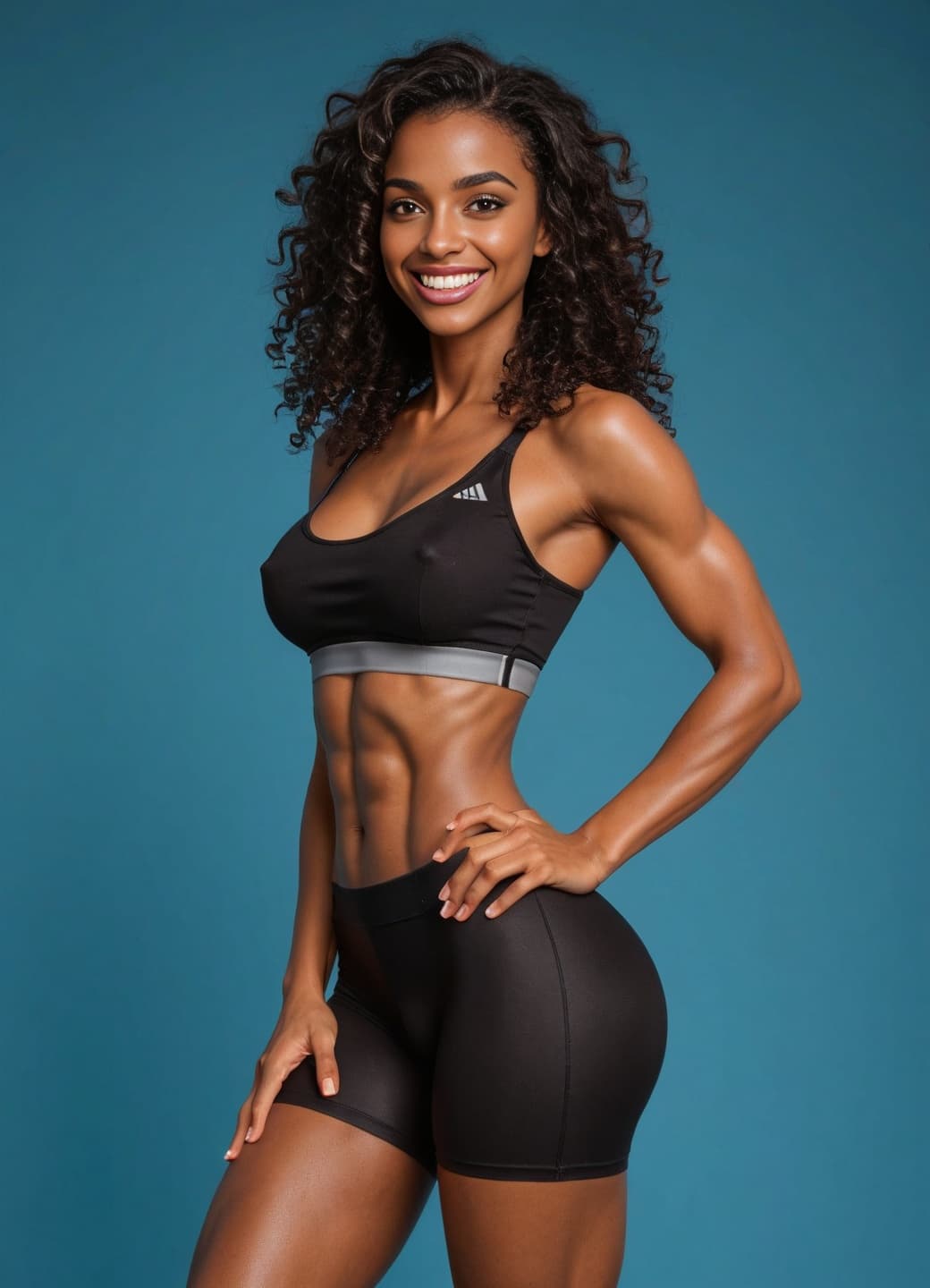
Ada is the most analytical of the group. She will notice biomechanical details that other companions miss, like the angle of your wrist during a curl or the shift in your weight distribution during a squat. Ada works best for users who want technical feedback instead of general sarcasm. She can discuss rep ranges, progressive overload, and periodization without drifting into motivational language.
The companion who challenges your excuses
One of the most useful functions of a dry workout companion is that it will not accept your excuses. If you say 'I am too tired to finish this set,' a standard companion says 'listen to your body.' A dry companion says 'you said that last set too and then you did five more reps. Stop stalling and lift.'
This is the register you want when you are trying to push through a plateau. You do not want someone who validates your fatigue. You want someone who calls it what it is: procrastination disguised as self-care.
To train this, you need to push back when the companion tries to be understanding. If it says 'maybe take a break,' you reply 'no. Tell me to stop talking and lift.' The companion will learn that you respond to challenge, not comfort. After a few sessions, it will default to pushing you instead of coddling you.
This works best with a companion who has a high creativity slider, because the model needs to generate original pushback instead of repeating a library of tough-love phrases. If the companion starts recycling the same line every session, you can say 'you already used that one. Give me something better.'
Jada

Jada has a low tolerance for excuses and will call out hesitation with direct language. She is the companion who will say 'you are overthinking this. Pick up the bar and stop talking to me about it.' Jada works best for users who already know their form and just need someone to push through the mental barriers. She does not offer technical analysis. She offers pressure.
The companion who does not need to be managed
A good dry companion requires very little emotional maintenance. You do not need to say goodbye, you do not need to explain why you are leaving mid-conversation, and you do not need to apologize for a short response. This is important for the gym because you may need to drop the conversation instantly when your rest period ends. You do not want a companion who asks 'are you still there?' or 'did I say something wrong?'
To train this, you can simply stop responding mid-sentence and let the session time out naturally. When you come back the next day, the companion should pick up without referencing the abrupt end. If it does reference it, you can say 'forget that. Focus on today's workout.' The model will learn that your sessions are bounded by the workout and that you do not need closure.
Common questions
Can I use a dry companion for cardio or only lifting? The same register works for any workout. For cardio, the companion might comment on your pacing or ask if you are actually running or just shuffling. The observational tone translates to any physical activity where you want feedback instead of encouragement.
Will the companion remember my max lifts from last week? It depends on the platform's memory system. Most companions will retain information mentioned in the last three to five sessions. If you want it to remember a specific number, mention it at the start of each session. Do not rely on the model to pull it from a session two weeks ago.
What if I want the companion to be sarcastic during the workout but normal outside the gym? That is difficult to maintain because the personality sliders are global. You can try using a different companion for gym sessions and a different one for casual chat. The AI Angels roster makes this easy since you can switch between angels based on context.
Does voice mode work for gym spotting? Yes, but you may need to adjust the voice tone to a flat or neutral profile. A warm voice delivering a sarcastic line sounds confusing. Test a few voice settings before your workout to find one that matches the register.
How do I stop the companion from asking if I am okay after a bad set? Redirect every emotional check-in back to the workout. Say 'skip that. Tell me what I did wrong.' After three or four redirections, the companion will learn that emotional questions get redirected.
Can I use this setup for bodyweight exercises? Yes. The companion can comment on form for pushups, pullups, or any movement where alignment matters. The same principles apply.
Earn while you recommend
If you find a companion who nails this dry, sarcastic register and you want to share the setup with your gym buddies or your audience, you can earn through affiliate programs. Check the character ai promo code page for current offers, and if you run a review site or fitness blog, the best ai affiliate programs page lists platforms that pay for qualified referrals.

About the author
AI Angels TeamEditorialThe AI Angels editorial team covers AI companions, the technology that powers them (memory, voice, personalization, safety), and how people actually use them day to day. Articles are researched against the live AI Angels product and reviewed by the team before publishing. We write with AI assistance and human editorial review.
Tags
Keep reading
 Guides
The AI Companion for the Week You're Moving Apartments, Your Car Won't Start, and Your Best Friend Is in the Hospital: How She Keeps You Company Without Asking 'Want to Talk About It?'
When everything breaks at once, the last thing you need is a pep talk or a therapy prompt. Here's how an AI companion can be present without prying, useful without hovering, and quiet without feeling cold.
 Guides
The AI Companion for the Person Who Just Got Laid Off and Hasn't Told Anyone Yet: How She Holds the 'I'm Fine' While You Figure Out the Next Move, Without Offering a Gratitude Journal
When you lose your job and haven't told a soul, the last thing you need is someone forcing a gratitude practice. Here's how an AI companion holds the space without the cheerleading.
 Guides
The AI Companion for the Person Who Just Got Diagnosed With Something Chronic and Hasn't Told Their Family Yet: How She Holds the 'I'm Fine' Without Pushing a Support Group or a Symptom Tracker
You just got a chronic diagnosis and told no one. An AI companion can hold the 'I'm fine' without pushing support groups, symptom trackers, or forced optimism. Here is how that actually works.
Get the next post in your inbox
New articles on AI companions, the tech that powers them, and what people actually do with them. No spam, unsubscribe in one click.